
The secret to a great lawn is working with the weather, not against it. As summer heat fades and autumn arrives, cooler temperatures, consistent moisture, and minimal weed competition provide the perfect conditions for growing a beautiful lawn. Here’s why fall hydroseeding is ideal for healthy, deeply-rooted grass.
The Benefits of Hydroseeding
Before we can talk about when to hydroseed, it’s important to know what makes hydroseeding different from other lawn seeding methods.
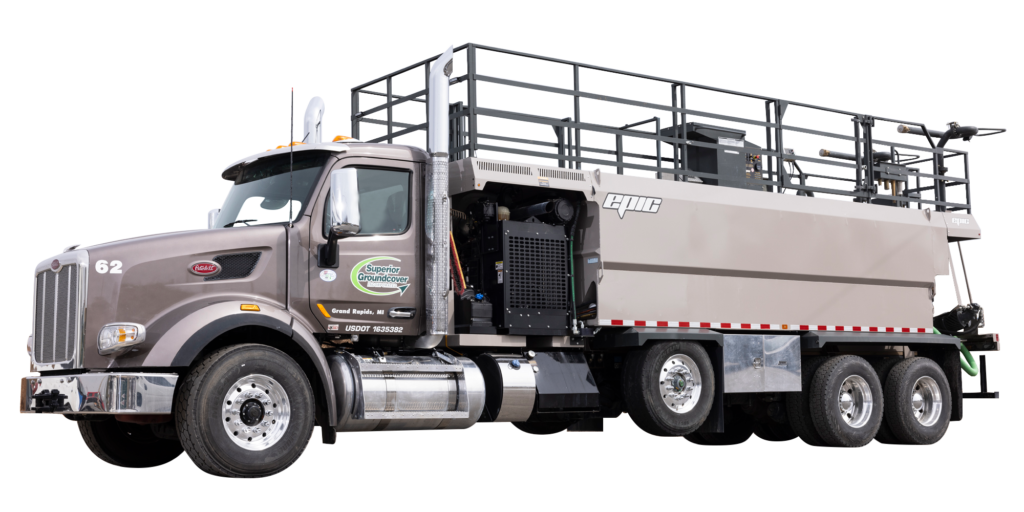
The hydroseeding process involves using specialized equipment to spray a custom hydroseed slurry onto prepared soil. Unlike broadcast seeding, hydroseeding ensures even seed distribution across large areas. It’s also more cost effective than sod installation.
The benefits of hydroseeding don’t stop at the planting phase. The hydroseeding mixture holds seeds in place while providing immediate nutrition and moisture retention. This leads to faster germination, fewer weeds, deeper roots, and more consistent growth. If you want a full lawn with a deep root system, a hydroseeded lawn is for you.
Why Fall and Spring Are Best for Grass Planting in West Michigan
West Michigan’s climate creates two distinct windows for optimal grass growth. Spring hydroseeding offers moderate temperatures and natural rainfall, while fall provides warm soil temperatures combined with cooler air temperatures. Both are combinations that grass seeds love.
5 Reasons Why Fall Hydroseeding Projects Are Successful
Although both fall and spring are great times to hydroseed, here are some of the advantages of a fall hydroseeding project:
Mild Temperatures Help with Seed Germination
Soil temperature matters more than air temperature for seed germination. Fall soil retains some of its summer warmth even after the temperature begins to drop. Even with the cooler air, the ground stays warm enough for quick seed germination.
To ensure the ground is warm enough for your grass seed, you’ll want to start your hydroseeding project in early fall. During the first 6 weeks after the application, newly seeded grass needs temperatures that range between 65 and 75 degrees. Temperatures that fall too far outside of that range cause stress for grass seedlings.
Weed Competition Drops Dramatically
Weeds love summer heat. Fall’s cooler temperatures cause many weed varieties to die back. This means your new grass has less competition for nutrients, water, and sunlight. Without aggressive weeds stealing their resources, your grass seedlings will be able to establish strong root systems without competing for survival.
Consistent Moisture Levels Reduce Watering Needs
New grass grows best with consistent moisture. Fall’s cooler temperatures and lower evaporation rates help your irrigation efforts go further. Your grass gets steady hydration without the stress of summer’s extreme heat.
Fewer Pests and Disease Pressures
We already mentioned that cool fall temperatures mean less pest pressure on your new seedlings. In addition, those turf and fungal diseases that love hot, humid summers aren’t as active in the fall. Your grass can settle in and grow strong without having to battle the problems summer seedings face.
Double Growing Season Advantage
Fall planting gives hydroseeded grass two optimal growing seasons—fall and spring—before facing the scorching summer sun. This head start paves the way for rapid spring growth and better summer survival rates.
How Superior Groundcover Ensures Fall Hydroseeding Success
There is a lot that goes into a successful hydroseeding project. Many homeowners, landscapers and contractors simply don’t have the time to deal with it all. They subcontract with Superior Groundcover to get a beautiful lawn that lasts without any of the planting stress. Here’s what makes our hydroseeding process unique:
Site Specific Planning and Custom Hydroseed Mixtures
No matter the time of year, we start by gathering important information about the property. A successful hydroseeding project requires a well-thought-out plan and a hydroseed mixture tailored to the landscape’s specific needs.
For instance, understanding how much sunlight the area receives helps us choose the right type of seed. The terrain—whether it’s sloped, hilly, or flat—guides us in deciding if erosion control blankets are necessary. Knowing the available irrigation options allows us to determine if we should include a water-retention additive in the hydroseed mix. Assessing the soil quality helps us decide if adding a layer of topsoil is necessary.
If the property has a history of struggling to grow healthy grass or if we suspect issues with the soil, we can conduct a soil test. Soil tests provide a detailed analysis of pH levels, nutrient deficiencies, and soil structure. By gathering all of this information first, we can address any underlying problems effectively before we start planting.
Proper Site Prep
We know that even the best hydroseeding materials and techniques won’t lead to lush lawns without proper site prep. Whether you do this piece yourself or leave it up to us, we won’t waste your time and money by hydroseeding a site that isn’t ready. The two essentials of site prep are:
1. Weed control
Fewer weeds give your lawn a greater chance of success. Hand weed removal and tilling work well for small areas. For larger areas or heavy weed infestations, applying a herbicide at least two weeks before hydroseeding yields the best results. Our hydroseed slurry also includes pre-emergent herbicides to prevent new weeds from germinating alongside your grass.
2. Soil Prep
Remember, site preparation makes the difference between a mediocre yard and a lush lawn your neighbors will envy. To get you the best results, we’ll start by clearing all debris, rocks, deep roots, and existing vegetation from the area.
Next, it’s time for topsoil and tilling. Loose, well-tilled soil allows seeds to penetrate easily and develop strong, deep roots. Taking the time to break up compacted areas and create a smooth, level surface is key to growing a great lawn.
We’ll also even out any low spots and add proper drainage. Water accumulation can drown seeds and create bare spots. Although hydroseeding itself is great erosion prevention, if your site experiences frequent soil erosion, we may recommend you add additional erosion control methods, like erosion control blankets.
3. Professional Application
Hydroseeding may look simple but it requires skill and technique to do well. Sub-par hydroseeding methods can lead to lawn disasters.
Our expert crew has years of experience evenly distributing seed mixtures across large areas. We also use advanced equipment that you won’t find at your local hardware store to ensure you get the best results. Our tools combined with our experience and skills ensure consistent coverage for uniform grass growth.
4. Ongoing Support and Follow-up
Superior Groundcover continues to support clients throughout the lawn establishment period. We give clients specific follow-up care instructions in our “Caring for Your New Lawn” brochure that we hand out after hydroseed services.
We will also come back to apply post-application fertilizer and monitor grass growth. If we notice any issues, we will work together to fix them.
Maintaining Hydroseeded Lawns in the Fall
Our follow-up care instructions always include:
Regular Watering
Consistent moisture makes or breaks hydroseeding success. Regular, light watering works better than heavy, infrequent irrigation. It keeps the soil surface moist without causing runoff or seed displacement.
For most sites, watering three times daily for 3-15 minutes during the first 4-6 weeks is ideal. The key is to keep the newly seeded lawn moist without saturating or leaving any standing water.
Post-Application Fertilizer
New grass needs regular nutrition to establish strong root systems. We recommend applying starter fertilizer every three weeks for the first 2-3 months after hydroseeding. It’s important to use a fertilizer specifically formulated for your type of hydroseed.
Hydroseed isn’t just for grass. We can also hydroseed wildflowers for pollinator habitat, erosion control mixes for slope stabilization, and specialty blends for unique applications.
Protect Seedlings
Avoid heavy foot traffic on hydroseeded areas for at least one month after application. Young grass needs time to develop strong root systems before it can handle regular use.
You’ll also want to delay mowing until grass reaches three inches in height. Early mowing can damage young plants.
Especially during the establishment period, you’ll want to monitor your grass for signs of disease or pest activity. Discolored patches, unusual growth patterns, or obvious pest damage should be addressed quickly to prevent bigger problems.
Take Advantage of the Best Time to Hydroseed
Fall hydroseeding accompanied by proper soil prep, quality materials, and follow up care give your new lawn the best chance for success.
Superior Groundcover’s effective and efficient hydroseeding process delivers exceptional results that exceed expectations. That’s why we are West Michigan’s go-to company for lush lawns that last. Contact Superior Groundcover today for an estimate. In no time, you could have a luxurious lawn that makes your property shine.